
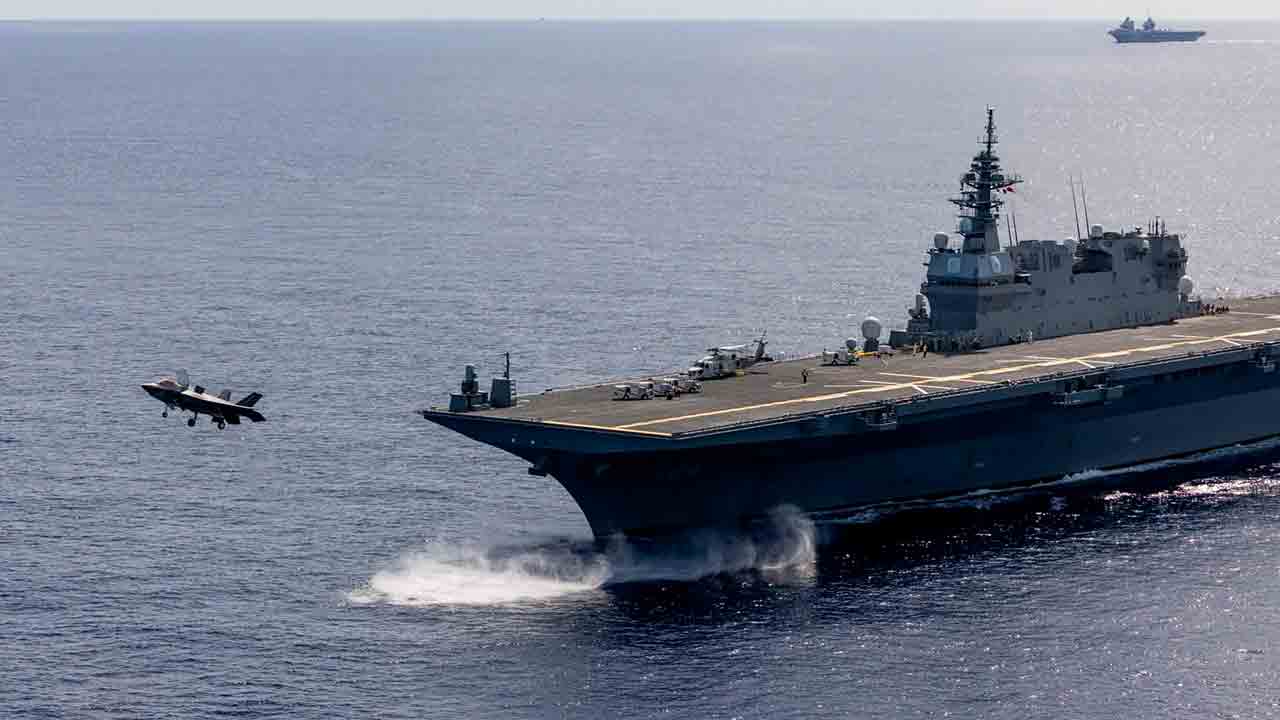
The Royal Navy of the United Kingdom has concluded an impressive display of military power and multinational cooperation in the Indo-Pacific, in a context marked by growing tensions with China.
For nine days of operations in the northern Philippine Sea, the flagship HMS Prince of Wales, leading Operation Highmast, worked side by side with naval forces from the United States and Japan in large-scale exercises.
+ Click here to watch the video
The highlight came when a British F-35B fighter landed on the Japanese helicopter carrier JS Kaga — the first such landing on a Japanese ship — symbolising a new stage in military integration between London and Tokyo.
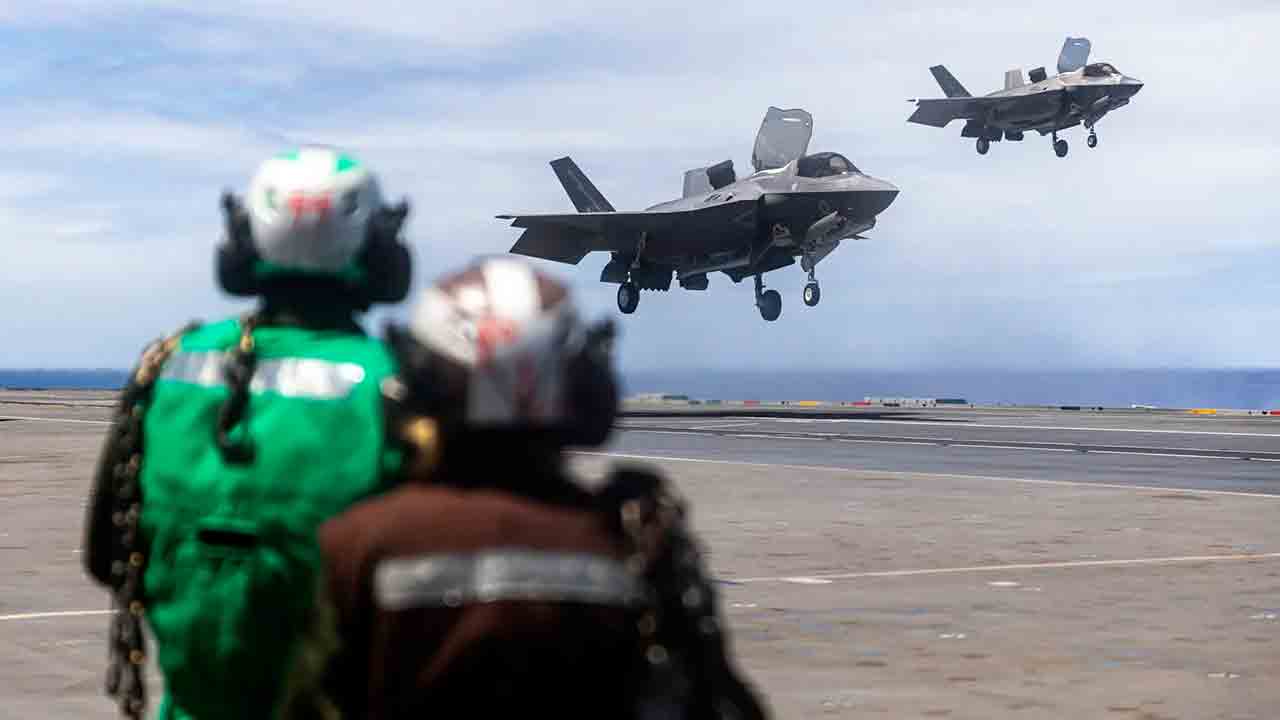
The operation brought together four powerful battle groups: the Carrier Strike Group Five of the USS George Washington, the Amphibious Ready Group of the USS America (USMC), Japan’s Kaga battle group, and the UK Carrier Strike Group — all engaged in manoeuvres including tactical interceptions, maritime strikes, and simulated aerial combat (“dogfights”).
In total, 11 ships and 23 aircraft from six countries — the United Kingdom, United States, Japan, Australia, Spain, and Norway — took part. Merlin helicopters from the British 845 Naval Air Squadron also landed on the Kaga, further enhancing interoperability between the navies.
+ Czech Republic Signs Multi-Million Euro Deal to Maintain Leopard 2A4 Fleet and Recovery Vehicles
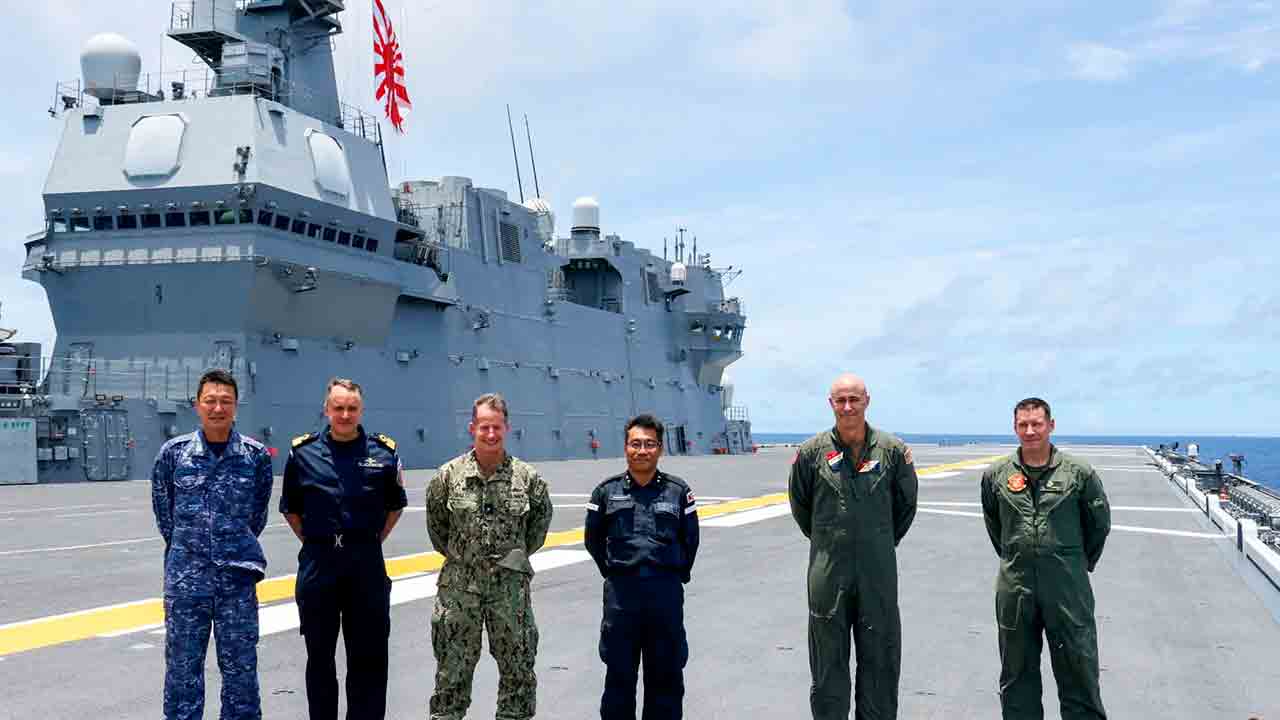
Commodore James Blackmore, commander of the UK Carrier Strike Group, stated that bringing together deck forces from three major maritime powers, along with escort ships from other nations, “shows the strength and interchangeability of combined task groups” and reinforces allied commitment to Indo-Pacific security.
Strategic context: direct message to Beijing
The northern Philippine Sea is a sensitive area, located close to strategic routes and disputed regions in the South China Sea, where Beijing has expanded its military presence and carried out intimidation actions against Taiwan and Southeast Asian neighbours.
Experts interpret the exercise as a clear show of force aimed not only at fostering cooperation among allies but also as a warning to China that the UK and its partners are ready to operate jointly in the event of a crisis. The simultaneous presence of three aircraft carriers — one British, one American, and one Japanese — underscores the rapid response capability in a potential conflict scenario.
In the coming weeks, HMS Prince of Wales and the destroyer HMS Dauntless will remain in Japan for maintenance and participation in diplomatic and defence events, including the Pacific Future Forum and the Defence and Security Industry Day, both focused on discussions about military technology, economic security, and regional stability.
Meanwhile, the frigate HMS Richmond and the tanker RFA Tidespring are visiting Busan, South Korea, further strengthening the UK’s presence in a strategic quadrant where the competition for influence with China is likely to intensify.
+ Kanye West’s Wife Stuns Fans with Futuristic Photo Shoot in Transparent Bubble
Source and images: Royal Navy. This content was created with the help of AI and reviewed by the editorial team.
